
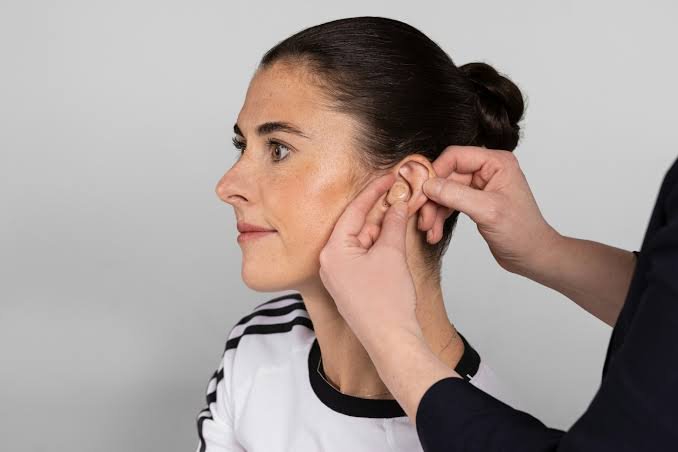
1. Persistent Feeling of Blocked Ears
One of the most common signs of excessive earwax is a persistent feeling of fullness or blockage inside one or both ears.
You may feel as though water is trapped in your ear, even when you have not been swimming or showering. This sensation can develop gradually as wax accumulates inside the ear canal and restricts the passage of sound.
Some people notice that their ears feel blocked after using earphones, wearing hearing aids or cleaning their ears with cotton buds.
Although blocked ears are commonly associated with earwax build-up, other conditions can cause similar symptoms. If the sensation continues or becomes uncomfortable, a healthcare professional can examine your ears to identify the underlying cause.
2. Difficulty Hearing Conversations Clearly
Another important warning sign is reduced or muffled hearing.
When excessive wax blocks the ear canal, sound may not travel through the ear as effectively as it normally would. You might find yourself increasing the television volume, asking people to repeat themselves or struggling to follow conversations in busy environments.
This can become particularly frustrating when communicating with family members, colleagues or friends.
If you notice a gradual reduction in hearing, it is worth arranging an assessment rather than assuming that the problem will disappear on its own.
Professional earwax removal may help improve hearing when excessive wax is confirmed as the cause. However, sudden hearing loss should always receive urgent medical assessment rather than being assumed to be an earwax problem.
3. Earache or Discomfort Inside the Ear
Earwax does not usually cause pain when present in normal amounts. However, excessive or impacted wax can sometimes create pressure and discomfort inside the ear canal.
You may experience:
- A dull ache inside one or both ears.
- A sensation of pressure or fullness.
- Discomfort when touching the affected ear.
- Irritation around the opening of the ear canal.
It is important not to assume that every earache is caused by wax. Ear infections, inflammation and other conditions can produce similar symptoms.
If you experience persistent or significant pain, seek advice from a healthcare professional before attempting any form of ear cleaning or removal.
4. Ringing or Buzzing Sounds in Your Ears
Have you ever experienced ringing, buzzing or humming sounds without an external source?
This condition is known as tinnitus. Although tinnitus can have several causes, excessive earwax blocking the ear canal can sometimes contribute to these sensations.
You might notice:
- Ringing sounds in one or both ears.
- A buzzing or humming noise.
- Difficulty concentrating because of background sounds.
- Increased awareness of internal sounds in quiet environments.
If tinnitus develops alongside blocked ears or reduced hearing, an ear examination may help determine whether earwax is contributing to the problem.
However, tinnitus should not automatically be attributed to wax. Persistent or sudden changes in hearing require appropriate medical assessment.
5. Itchy Ears and Irritation
Occasional itching around the ears is not necessarily a reason for concern. However, persistent irritation inside the ear canal can sometimes be associated with excessive wax or other ear conditions.
You may feel tempted to use cotton buds, fingers or other objects to scratch the affected area. Unfortunately, inserting objects into your ears can irritate the delicate skin and push existing wax further inside.
Excessive cleaning can also remove the protective layer of natural earwax, potentially contributing to dryness and irritation.
If itching continues, a professional examination can help identify whether wax, dry skin, inflammation or an infection is responsible.
6. Dizziness or Balance Problems
Although less commonly recognised, excessive earwax can sometimes be associated with dizziness or a sensation of imbalance.
You might experience a feeling of light-headedness, unsteadiness or difficulty maintaining your balance.
However, dizziness has many possible causes, including inner ear conditions and problems unrelated to earwax.
If you experience persistent dizziness, it is important to seek medical advice instead of assuming that removing earwax will resolve the problem. Sudden or severe dizziness, particularly alongside other concerning symptoms, requires prompt medical attention.
What Causes Excessive Earwax Build-Up?
Earwax production is a normal process, and the amount produced varies between individuals. Some people naturally produce more wax, while others have ear canals that make it difficult for wax to move out naturally.
Several factors can contribute to excessive earwax build-up, including:
Using cotton buds regularly: Inserting cotton buds into the ear canal can push wax deeper, making it harder for the ear to clear naturally.
Wearing hearing aids: Hearing aids and other devices inserted into the ear can interfere with the natural movement of earwax.
Narrow ear canals: Some individuals naturally have narrower ear canals, which can make wax accumulation more likely.
Age-related changes: Earwax can become drier and harder as people get older, making it more difficult to move out of the ear naturally.
Skin conditions: Certain skin conditions affecting the ear canal can contribute to irritation and wax-related problems.
Understanding these factors can help you recognise why some people experience recurring blockages.
Why You Should Avoid Removing Earwax Yourself
When your ears feel blocked, it can be tempting to use cotton buds, hairpins or other household objects to remove the wax.
However, these methods can create additional problems. Instead of removing the blockage, you may accidentally push the wax further towards the eardrum.
You should avoid:
- Inserting cotton buds deep inside your ears.
- Using sharp objects to remove hardened wax.
- Trying ear candles, as there is no reliable evidence that they remove earwax.
- Using household vacuum devices or unapproved cleaning tools.
For some people, suitable ear drops containing olive oil can help soften earwax so that it moves out naturally. However, ear drops are not appropriate for everyone, particularly those with a perforated eardrum or certain existing ear conditions.
Speak to a pharmacist or healthcare professional if you are unsure which treatment is suitable.
When Should You Consider Professional Earwax Removal?
If your ears remain blocked, your hearing becomes muffled or you experience recurring discomfort, professional assessment may be helpful.
A trained healthcare professional can examine your ear canal and determine whether excessive wax is responsible for your symptoms.
At Parnell Pharmacy, patients can access professional earwax removal using microsuction and ear irrigation where clinically appropriate.
Microsuction is a method that uses a specialised suction device to remove excess wax under direct visualisation. The clinician examines your ears before recommending the most suitable approach.
Professional treatment may be particularly useful if:
- Your ears regularly become blocked.
- You experience persistent muffled hearing.
- Earwax does not clear with suitable self-care.
- You wear hearing aids and regularly experience wax accumulation.
- You have difficulty removing hardened or impacted earwax.
If you experience sudden hearing loss, bleeding, discharge, severe pain or significant dizziness, seek appropriate medical assessment rather than booking routine wax removal as a substitute.
Professional Earwax Removal in Bow at Parnell Pharmacy
If you are experiencing blocked ears or suspect excessive wax is affecting your hearing, getting professional advice can help you understand the available treatment options.
Parnell Pharmacy provides professional earwax removal in Bow, East London, using microsuction and ear irrigation where appropriate following an individual assessment.
Our trained healthcare professionals examine your ears before recommending a suitable removal method based on your ear health and the amount of wax present.
The service includes an initial ear examination, professional treatment where appropriate and aftercare advice to help you maintain good ear health.
Whether you are experiencing blocked ears, muffled hearing or recurring earwax problems, our team can help you understand the next steps.
If you are looking for earwax removal in Bow, you can visit Parnell Pharmacy at:
Parnell Pharmacy
625–627 Roman Road, Bow, London E3 2RN
Telephone: 020 8980 3376
You can also learn more about our professional earwax removal in Bow service and arrange an appointment.